Neue Befunde zur Antarktis-Kartographie
(dg) Auf dem diesjährigen One-Day-Meeting habe ich erstmals meine Befunde zur Georeferenzierung der Antarktisküsten vorgestellt. Diese Forschung fand zwischen 2012 bis 2016 statt, bis die diffamierenden Anschuldigungen von Dr. Zahi Hawass meine Habilitation an der TU Dresden vorzeitig beendeten.
Dennoch hatte unser Team (Prof. Manfred Buchroithner und Dr. Andreas Bruschke u.a.) bis dahin etliche neue Fakten zusammengetragen, dass bestimmte Karten und Globen aus der Frühen Neuzeit geographische Bildinhalte über die Form und Lage der Antarktis zeigen, die man damals nicht generieren hätte können. Diese frühe Phase der Geographie wird heute als Rätselkartographie bezeichnet und reichte von 1490 bis etwa 1565.
Am 1. Oktober 2022 lud mich die A.A.S. zum vierten Mal nach Bad Gögging nahe Ingolstadt ein. Dort präsentierte ich die gemeinsamen Forschungsergebnisse, die erhebliche Zweifel an der gängigen Geschichtsforschung aufwerfen. Die beinahe präzisen Darstellungen der Küstenverläufe der Antarktis auf Karten zwischen 1518 bis 1565 passen nicht in unsere Vorstellung über die Kulturgesellschaften der Frühzeit. Die Ursachen liegen darin, dass es im frühen 16. Jahrhundert erheblich kühler war als heute und natürlich die astronomisch-kartographischen Fertigkeiten unzureichend waren. Sie werfen kulturhistorische Fragen auf, die wir gegenwärtig nicht beantworten können.
Dass wir keine Lösungen für diese vor- und frühgeschichtlichen Probleme haben, schmälert nicht die Tatsache ihrer Existenz. Das Publikum reagierte sehr interessiert auf diese neue Forschungsarbeit. Wen das Thema interessiert, dem empfehle ich mein Buch über die Rätsel der Entdeckergeschichte.
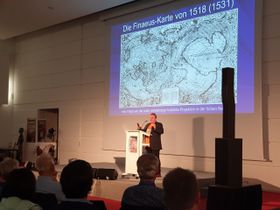
Meine Rede über mysteriöse Antarktiskarten am Beginn des 16. Jahrhunderts. //
My speech about mysterious Antarctic maps at the beginning of the 16th century.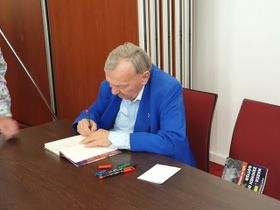
Hauptredner war natürlich wieder der Gründer der A.A.S. Erich von Däniken. //
The main speaker was of course again the founder of the A.A.S. Erich von Daniken.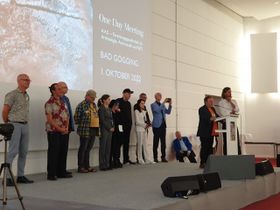
Auf der gemeinsamen Podiumdiskussion standen alle Redner den Fragen des Publikums zur Verfügung. Im Mittelpunkt standen jedoch Fragen mich zu den mysteriösen Antarktiskarten. Sie regen enorm zu Spekulationen an, weil sie durch unser jetziges Wissen nicht erklärbar sind. //
At the joint panel discussion, all speakers were available to answer questions from the audience. The focus, however, was on questions about the mysterious Antarctic maps. They stimulate enormous speculation because they cannot be explained by our current knowledge.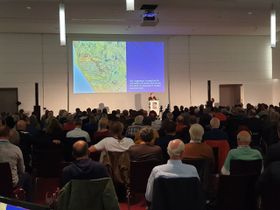
Im Hintergrund die Pirí-Reis Karte (1507). Sie enthält als einzige Karte ein Impressum, das antike Quellen und Karten für die Erstellung der Gebiete im fernen Westen und Süden verantwortlich macht. Alles nur Zufall oder am Ende doch Außerirdische? //
In the background the Pirí-Reis map (1507). It is the only map that contains an imprint that makes ancient sources and maps responsible for the creation of the areas in the far west and south. Is it all coincidence or is it alien after all?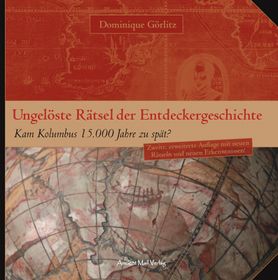
Das Cover meines Buches "Die Rätsel der Entdeckergeschichte", in dem es auch die kartographischen Darstellungen der Antarktis geht. Man kann es über meine ABORA-Webseite bestellen: abora.eu/shop. //
The cover of my book "The Riddles of the Discovery Story", which also deals with the cartographic representations of Antarctica. You can order it through my ABORA website: abora.eu/shop.


New findings on Antarctic cartography
At this year's One Day Meeting 2022, I presented my latest work about geo-referencing of the Antarctic coasts for the first time. This research took place between 2012 to 2016. Unfortunately, the blatant allegations made by Dr. Zahi Hawass prematurely ended my habilitation at the TU Dresden in 2017.
Nevertheless, by then our team (Dr. Andreas Bruschke and Prof. Manfred Buchroithner and others) had collected a number of new facts that certain maps and globes from the early modern period show geographical image content about the shape and location of Antarctica that could not have been generated at this time. This early phase of geography is now known as puzzle cartography and lasted from 1490 to around 1565.
On October 1st, 2022, the A.A.S. invited me for the fourth time to Bad Goegging near Ingolstadt. There, I presented the joint research results, which raise considerable doubts about current historical research. The near-accurate depictions of Antarctic coastlines on maps between 1518 and 1565 do not fit our understanding of early cultural societies. The reasons are that it was considerably cooler in the early 16th century than it is today and of course, the astronomical and cartographic skills were insufficient. They raise cultural-historical questions that we cannot currently answer.
That we have no solutions to these prehistoric and protohistoric problems does not detract from the fact of their existence. The audience responded with great interest to this new research. If you are interested in the topic, I recommend my book about the mysteries of the history of discovery.
